
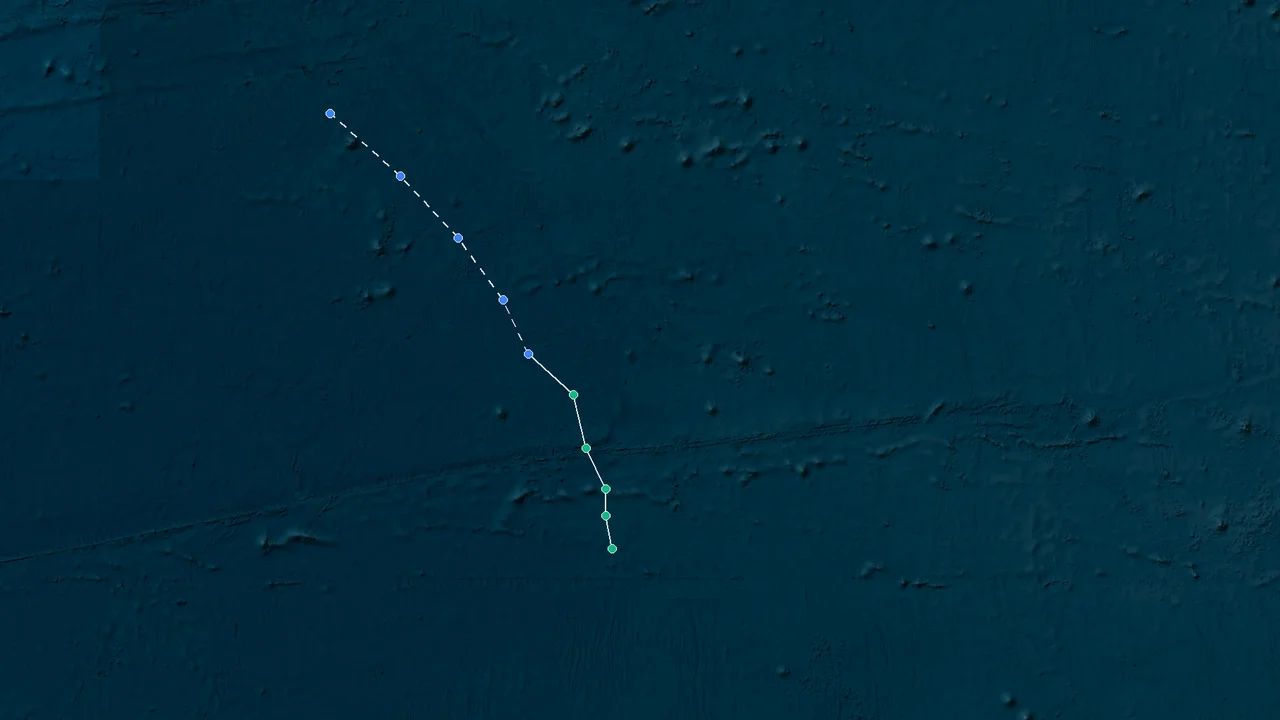

Storm Elida 2026 Retrospective Report In Ko
Pre-Made Fake Scalps vs. Bleached Knots: The Bald Spot & Orange Lace Trap
Bottom line: If your priority is a believable scalp with less customization, a well-built pre-made fake scalp wig can outperform a heavily bleached-knot unit, but only when the scalp simulation, lace color, ventilation, and knot security are actually well engineered. A bad pre-made fake scalp can produce the exact problems buyers are trying to avoid: an obvious bald patch, orange or gray lace, excessive density, poor airflow, and a plastic-looking part.
The key distinction is not simply “fake scalp vs. bleached knots.” It is how the hair is attached, how the scalp illusion is constructed, and how much chemical processing the hair and knots have received.
Peroxide bleaching is not harmless to hair fibers: controlled research has found protein loss, cuticle disruption, oxidation, and deeper cortical damage as bleaching severity increases.
PubMed
That does not mean every bleached-knot wig will shed badly, but it does explain why aggressive bleaching should not be treated as a free route to realism.
If you are deciding between a conventional lace front, a fake-scalp unit, or a newer injected/silk-base construction, start with our Glueless Wig vs. Lace Front comparison guide
, then use the tests below before committing your money.
- The Core Problem: Why “Natural Scalp” Marketing Can Still Look Fake
A realistic scalp illusion depends on at least four measurable variables: lace translucency, knot visibility, hair density, and the transition between the visible scalp zone and surrounding hair.
The common buying mistake is to judge a wig from one close-up product photograph.
That photograph may hide the exact areas that matter in real life:
the front edge under daylight
the crown under overhead lighting
the transition between fake scalp and lace
the density immediately behind the hairline
the color of the lace against your actual skin
the underside of the cap
the amount of hair lost after repeated brushing
The “bald spot” trap
A convincing scalp simulation should create visual scalp exposure without creating an isolated low-density hole; an excessively sparse area can look like alopecia rather than a natural part.
This is where some pre-made units fail.
A manufacturer may reduce hair density around a simulated part to imitate scalp exposure. If the reduction is too abrupt, the viewer sees a circular or elongated bald spot rather than a gradual follicular transition.
The problem becomes more obvious when the hair is moved.
Try this simple test:
Put the wig on a mannequin or your head.
Stand beside a window rather than under warm bathroom lighting.
Move the hair 1–2 inches away from the intended part.
Photograph the area from approximately eye level.
Repeat under overhead light.
Look for a sudden density cliff.
A good scalp illusion should survive movement. It should not only work when the hair is positioned exactly as shown in the product photograph.
The orange-lace trap
Lace color is a visual-matching problem, not a synonym for lace quality, and a lace that appears orange, peach, gray, or chalky against your skin can remain visibly artificial even when the knots are nearly invisible.
This matters particularly with pre-colored or pre-tinted fake scalp systems.
The phrase “pre-made fake scalp” does not guarantee a universal skin match. Transparent lace is still transparent material, not human skin. HD lace can reduce the visual grid, but it can still require tinting depending on complexion and lighting.
WigAnswers
A useful rule:
If the lace color is wrong, invisible knots cannot rescue the hairline.
Real buyer scenario
Imagine a buyer who wants a 16–20 inch human-hair wig for office wear five days a week.
She does not want to:
bleach knots herself
pluck a new hairline
tint lace every time she changes units
spend 45 minutes installing adhesive
discover three weeks later that the front is shedding
A pre-made fake scalp unit may fit this routine better than a conventional lace front requiring extensive customization.
But she still needs to verify the construction.
That distinction matters more than the marketing label.
- 2026 Construction Shift: Pre-Made Fake Scalp vs. Bleached Knots
A conventional bleached-knot system hides knots through chemical lightening, while newer scalp-simulation constructions can reduce visible knot contrast through physical layering, finer knotting, or injected hair placement.
A conventional lace wig typically relies on individual hairs being ventilated into lace.
The knot is the mechanical connection.
Bleaching attempts to make that connection less visible by reducing the dark appearance of the knot.
The basic idea works. Retailers have long marketed pre-made fake scalp units with pre-plucked hairlines and bleached knots specifically to create a scalp-like parting.
Hebery
The technical weakness is that bleaching solves a visual problem by chemically processing the hair around the root.
Research on human hair shows why this deserves attention. Progressive peroxide bleaching can cause protein loss and oxidation, while microscopy has documented damage to the cuticle and cortex.
PubMed
That is a hair-fiber finding, not proof that every bleached knot will fail.
It is, however, a good reason to ask how much processing a wig has undergone.
What “micro-knots” actually change
Micro-knots reduce the visual footprint of the attachment point, but knot size alone does not establish durability, density accuracy, or overall scalp realism.
A smaller knot can look cleaner.
It cannot compensate for:
excessive hair density
incorrect lace color
poor ventilation
uneven knot spacing
a harsh hairline
weak cap construction
This is why “micro-knot” should be treated as a construction specification, not a magic quality stamp.
What “silk-base injected” means
A layered silk-base construction can conceal the knot beneath the visible scalp surface, while injected hair can create a stronger visual impression of hair emerging from a scalp-like base.
Some commercial fake-scalp systems use a silk layer over lace, with hair inserted through the silk so that the knots are concealed between layers. One current manufacturer describes this exact construction as a silk-top system designed to hide the knots and imitate hair emerging from the scalp.
Hebery
That can produce a very clean part.
But there is a trade-off.
A thicker multi-layer scalp simulation can affect:
airflow
weight
flexibility
drying time
how naturally the base moves
how well the construction conforms to the head
The best-looking close-up photograph is therefore not automatically the best everyday wig.
2026 comparison
| :: | :: |
| Construction | Main realism mechanism | Main risk | Best-fit use |
| :: | :: |
| Conventional lace + bleached knots | Chemical reduction of knot contrast | Over-processing, visible regrowth/contrast, shedding if construction is weak | Buyers wanting customizable lace |
| Pre-made fake scalp + lace | Simulated scalp zone + concealed/softened knots | Orange lace, artificial bald patch, fixed part | Fast everyday styling |
| Micro-knot lace | Smaller attachment points | Marketing claims may exceed measurable construction quality | Buyers focused on natural parting |
| Silk-base injected | Hair inserted through a scalp-like layer | Potentially less airy/heavier construction | Fixed or limited parting |
| Standard unbleached lace | Natural knot structure | Darker visible knots | Budget or highly customizable units |
The important point is that there is no single construction that wins every use case.
A fixed part and a daily glueless wig impose different engineering requirements from a full-lace unit designed for multiple hairstyles.
- Decision Matrix: What to Measure Before You Buy
For everyday wear, cap fit, lace color, knot security, and ventilation should be checked before paying a premium for ultra-thin lace because realism is a system property, not a single-material specification.
“HD lace” is also not a regulated guarantee of a particular construction. Current industry guides commonly describe HD lace as substantially thinner and more translucent than conventional lace, but terminology varies among suppliers.
ToolGuideDaily
Use specifications as clues, not proof.
Buyer-side stress-test benchmark matrix
The following thresholds are practical acceptance tests for buyers, not manufacturer-certified laboratory results; they are designed to expose weak construction before the return window closes.
| :: | :: |
| Test | Practical pass target | What to inspect | Failure signal |
| :: | :: |
| Lace color check | No obvious orange, gray, white, or pink cast at arm's length | Daylight + indoor light | Lace remains visibly separate from skin |
| Part transition | Gradual density transition over roughly 1–2 in. | Move hair around the part | Abrupt bald circle or density cliff |
| Hairline density | No visibly uniform “helmet” row | Front + 45° angle | Hairline looks stamped or wig-like |
| Knot inspection | Consistent knot size and spacing | Phone macro camera | Large random knots or empty patches |
| Shedding screen | No repeated handful-sized release during controlled brushing | 50 gentle brush passes | Multiple loose clusters or visible ventilation loss |
| Cap stretch | Returns to shape after gentle stretch | Stretch for 10 seconds | Permanent deformation |
| Lace handling | No new run or tear after careful adjustment | Two gentle fit/removal cycles | Fraying, splitting, or pulled ventilation |
| Heat check | No strong plastic/chemical odor after normal warm styling | Manufacturer-approved temperature | Odor, melting, stiffening, or discoloration |
| Part realism | Scalp effect remains believable from 12–24 in. | Eye-level daylight | Part looks painted or excessively empty |
| Ventilation | Air can pass through exposed mesh areas | Gentle airflow/fan test | Large opaque zones with poor airflow |
| Fit stability | Wig remains centered during normal head movement | Walk, turn, bend | Sliding, lifting, or strap pressure |
These tests are intentionally simple.
You do not need a tensile-testing machine in your bedroom.
Cap size comes before lace technology
A correctly measured cap can prevent more daily friction than upgrading from ordinary lace to a more expensive lace grade.
Measure your head circumference according to the seller's instructions rather than assuming “average” will fit.
As a practical reference, many wig sellers group sizes around:
Petite: approximately 21–21.5 inches
Average: approximately 22–22.5 inches
Large: approximately 23–23.5 inches
Exact sizing varies by manufacturer.
A tight cap can cause:
temple pressure
sliding
lace tension
premature hairline stress
headaches
unnecessary adhesive use
A loose cap creates a different problem: movement.
No lace technology fixes the wrong cap.
- Real-Wear Testing: How to Catch Problems Before the Return Window Closes
A 72-hour staged wear test can expose fit, color, airflow, shedding, and styling problems that a five-minute mirror inspection often misses.
Do not immediately cut the lace.
Do not immediately bleach anything.
Do not immediately glue the wig down.
Preserve your return eligibility until the unit passes inspection.
Day 0: Photograph before customization
Photographing the unit before modification creates a visual baseline that lets you distinguish factory defects from later customization damage.
Take photographs of:
Front hairline
Both temples
Crown
Parting area
Lace underside
Knots
Wefts
Adjustable straps
Ear tabs
Any fake-scalp transition
Use natural daylight.
Avoid beauty filters.
Keep the original packaging.
Day 1: Fit and color
A 20-minute unglued fitting can reveal cap instability and lace-color mismatch before adhesive or trimming removes your easiest return option.
Wear the wig without permanent modification.
Walk around.
Look down.
Turn your head.
Sit at a desk.
Stand near a window.
Then check the hairline from approximately 2 feet away.
You are looking for movement, not perfection.
Day 2: Movement and shedding
A controlled 50-pass brushing check is useful as a screening test because loose knots or poorly secured ventilation often become visible through repeated gentle handling.
Use the brush recommended for the hair texture.
Do not yank.
Do not deliberately torture the wig to manufacture a failure.
Count loose strands approximately rather than pretending that one universal shedding number defines quality.
The meaningful warning signs are:
repeated clusters
one specific bald area
a rapidly thinning hairline
knots pulling through the lace
increased shedding after ordinary handling
There is no credible universal rule that “X hairs per day” proves a wig is defective.
Construction, density, hair length, curl pattern, ventilation technique, and previous processing all matter.
Day 3: Heat and humidity simulation
A short controlled exposure to your normal environment can reveal whether the cap, lace, and hair behave differently once moisture and movement enter the equation.
For an office wearer, that might mean:
commuting
sitting in a warm room
walking outdoors
wearing the unit for several hours
For an active wearer, the test should include your actual routine.
Do not use excessive heat simply to test the wig.
The goal is realistic use.
The social-confidence test
A wig that looks convincing only under a bathroom mirror can fail the real-world test because daylight, overhead lighting, and side angles expose lace color and density transitions.
Ask yourself:
Does the part still look natural from 12 inches?
Does the hairline look acceptable from 45 degrees?
Does the lace disappear under daylight?
Does the fake scalp look like skin or like a patch?
Does the hair move independently of the scalp base?
Does the cap remain secure when you turn your head?
If the answer changes dramatically between lighting conditions, investigate before customizing.
For additional visual comparison, our Lace Front Wig Try On Guide
can help you evaluate hairline placement and proportions before making a final style decision.
- Who Should NOT Buy a Pre-Made Fake Scalp Wig?
A pre-made fake scalp is a poor fit for buyers who need unrestricted parting, maximum airflow, frequent customization, or complete control over lace color and hairline density.
❌ Do NOT buy it if you need unlimited parting
A simulated scalp area is often designed around a specific visual configuration.
If you regularly switch between:
middle part
deep side part
high ponytail
exposed crown
half-up styles
a conventional lace construction may give you more freedom.
❌ Do NOT buy it if the cap feels hot before customization
A scalp simulation can involve additional layers.
If you already find the cap warm during a short fitting, adding adhesive, wig grips, or extra layers may make the problem worse.
❌ Do NOT buy it if the lace color is obviously wrong
Do not assume foundation will magically fix everything.
A strong orange or gray cast can require substantial tinting.
If the seller's return policy allows it, return the mismatch rather than turning a new wig into a chemistry project.
❌ Do NOT buy it if you want a highly customized hairline
Pre-plucked is not the same as custom-plucked.
A factory hairline may be:
too straight
too dense
too symmetrical
too low
too uniform around the temples
❌ Do NOT buy it if you refuse maintenance
Human hair still behaves like hair.
You will eventually need to deal with:
washing
conditioning
detangling
heat protection
drying
storage
lace cleaning
occasional knot or hairline maintenance
A fake scalp reduces some installation work.
It does not create a maintenance-free wig.
- Full-Cycle Cost: The $200 Wig That Becomes a $350 Project
The true purchase cost is the wig price plus customization, maintenance, replacement, and failure costs over the period you actually expect to wear it.
Use this equation:
Total ownership cost = purchase price + customization + maintenance + accessories + shipping/returns + replacement cost
For example:
| :: | :: | :: |
| Wig | $200 | Initial purchase |
| Lace tint | $10–25 | May be unnecessary if factory color is correct |
| Wig shampoo/conditioner | $20–40 | Recurring maintenance |
| Comb/brush | $10–25 | Hair-specific tools |
| Wig stand | $10–25 | Storage |
| Adhesive/grip | $0–30+ | Depends on installation |
| Professional customization | $50–150+ | Optional but significant |
| Replacement reserve | Variable | Accounts for premature lace/hair failure |
A cheap wig that requires extensive professional correction may be more expensive than a better-prepared unit.
The reverse is also true.
A premium label is not proof of better economics.
Calculate cost per wear
Cost per wear becomes more useful than sticker price when two wigs have different maintenance requirements.
Suppose:
Wig A costs $180 and lasts 80 useful wears.
Wig B costs $280 and lasts 160 useful wears.
Ignoring maintenance, their approximate purchase-price cost per wear is:
Wig A: $2.25/wear
Wig B: $1.75/wear
But do not use this calculation to assume Wig B is automatically better.
The 160-wear lifespan must be demonstrated by the actual construction and your care routine.
Current consumer guides commonly cite roughly 1–2 years for well-maintained human-hair HD lace units, while other sources report shorter periods depending on handling and wear frequency. That spread is itself a warning against treating lifespan claims as guarantees.
HDLace.com
- The Bleached-Knot Question: Is Bleaching Automatically Bad?
Bleaching is not automatically a defect, but increasing bleach severity increases measurable structural risk to the hair fiber.
This distinction matters.
Bleaching can improve the appearance of dark knots.
That is a legitimate cosmetic objective.
The scientific issue is the mechanism.
Research has found that progressive peroxide bleaching increases protein loss and oxidation and can damage both cuticle and cortex structures.
PubMed
Another study found bleached hair can develop cuticle separation, pores, and longitudinal fissures under excessive bleaching conditions.
PubMed Central (PMC)
So the correct buying question is not:
“Are the knots bleached?”
Ask instead:
“How aggressively were they processed, and does the finished construction remain mechanically sound?”
Look for:
consistent knot size
secure ventilation
minimal empty patches
no powdery or broken-looking roots
no unusually fragile hairline
no sudden shedding after gentle handling
Why “more bleached” is not necessarily “more natural”
A completely invisible knot is not useful if the surrounding hairline becomes excessively sparse or fragile.
This is where some customization goes too far.
The buyer sees:
“No visible knots!”
But the camera may not show:
“Why are there only three hairs per centimeter around the front?”
Natural hairlines are not perfectly uniform.
An overly aggressive combination of bleaching and plucking can trade knot visibility for density loss.
That is the bald-spot trap.
- Pre-Made Fake Scalp vs. Bleached Knots: The Practical Choice
For fast daily wear, pre-made scalp construction reduces customization work; for buyers who prioritize styling freedom and personalization, conventional lace with controlled knot customization preserves more flexibility.
| :: | :: | :: |
| Fast morning routine | Pre-made fake scalp | Lace color + scalp transition |
| Maximum styling freedom | Lace front/frontal | Lace area + ventilation |
| Fixed natural part | Fake scalp or silk-base | Part realism |
| Minimal chemical processing | Micro-knot / concealed-knot design | Actual knot construction |
| Frequent customization | Conventional lace | Lace durability |
| Daily glueless wear | Well-engineered pre-made unit | Cap fit + grip |
| Maximum airflow | Lightweight lace construction | Amount of layered material |
| Deep customization | Traditional lace | Knot security after customization |
| Close-up photography | Fine HD-type lace + controlled density | Lighting performance |
| Lowest upfront price | Standard lace | Return policy and construction quality |
The right decision is therefore driven by how you wear the wig, not by whichever technology has the newest name.
If you want to compare the finished appearance on different styles and face proportions, use the Try On Guide
before ordering.
- The 3-Month Maintenance Reality
A realistic 90-day ownership plan should include inspection, gentle washing, controlled drying, and periodic hairline checks rather than waiting for visible shedding to become severe.
Week 1
Establish the original condition.
Photograph the hairline.
Record cap fit.
Check shedding.
Check lace color in daylight.
Do not make unnecessary modifications.
Weeks 2–4
Wash according to the hair and manufacturer's care instructions.
Condition primarily through the lengths and ends.
Avoid aggressive rubbing at the lace.
Dry thoroughly before storage.
Inspect the part after washing.
Fine lace is particularly vulnerable to rough handling, and current lace-care guidance consistently emphasizes gentle cleaning, careful removal, and avoiding unnecessary pulling.
WigAnswers
Month 2
The second month is when repeated handling becomes more informative than the unboxing appearance.
Check:
front-edge fraying
thinning temples
loose ventilation
cap deformation
persistent tangling
changes in the simulated scalp surface
Month 3
At 90 days, compare the current hairline with your Day-0 photographs to distinguish normal cosmetic aging from construction failure.
Look specifically at the same five points:
Center hairline
Left temple
Right temple
Part
Crown
If one area has visibly lost density while the rest remains stable, the problem may be localized ventilation or handling rather than the entire wig being “bad.”
- Practical Pre-Purchase Checklist
A 10-minute pre-purchase audit can eliminate many avoidable mistakes before you pay for a wig that requires expensive correction.
Measure your head circumference using the seller's sizing method.
Confirm whether the listed cap size is adjustable.
Ask whether the fake scalp is lace, silk, polyurethane, or a layered combination.
Ask whether the hair is injected, hand-tied, machine-wefted, or a combination.
Ask exactly where the knots are bleached.
Ask whether the hairline is pre-plucked or only advertised as “natural.”
Request an unfiltered daylight photograph if the listing lacks one.
Check the lace color against your actual complexion.
Look for a gradual density transition around the part.
Check for an isolated bald-looking patch.
Check whether the simulated scalp has an abrupt edge.
Confirm whether the part is fixed or freely repositionable.
Ask whether the cap contains additional non-breathable layers.
Confirm the return window before cutting lace or applying adhesive.
Verify whether customized, tinted, cut, or worn units remain returnable.
Photograph the unit immediately after opening.
Perform a 20-minute unglued fitting.
Test the unit under daylight and indoor lighting.
Perform a gentle 50-pass brushing screen.
Check the hairline from 12–24 inches rather than only from a mirror close-up.
Keep all packaging until the unit passes inspection.
Calculate purchase price plus maintenance and customization costs.
Recheck the unit after 7, 30, and 90 days.
Final Verdict: Buy the Construction, Not the Label
The most reliable buying strategy in 2026 is to evaluate the entire scalp system, because “fake scalp,” “micro-knot,” “silk base,” and “HD lace” describe components rather than guaranteed performance.
A pre-made fake scalp makes sense when your priority is a fast, low-customization routine and you are comfortable with its intended parting configuration.
Bleached knots make sense when you want greater customization and understand the trade-off between knot concealment and chemical processing.
Micro-knots and injected or silk-base systems can reduce visible knot contrast without relying exclusively on aggressive bleaching, but their names alone do not prove better durability, airflow, or realism.
The strongest purchase is the one that passes the boring tests:
correct cap size, believable density, compatible lace color, secure ventilation, reasonable airflow, controlled shedding, and a return policy that protects you before customization.
The orange lace is a problem.
The bald-looking part is a problem.
But the most expensive mistake is buying a wig because the product photograph looks perfect, then discovering that the construction only works from one angle, under one light, with the hair positioned exactly one way.
Test the wig like a product.
Then decide whether it deserves to stay on your head.